Wednesday, January 2, 2013

What Pastors Do

2013 has arrived and this column has me thinking of what I shall do with the new year.
 
I am prompted by a question that was asked of me not long ago by my five-year-old daughter Gabrielle. "What do pastors do all day?" Perhaps, dear reader, you have wondered the same.
 
I sought to answer the question for Gabrielle by taking her with me on a pastoral visit to see a friend from church, one of our more elderly, "homebound" members. This is a woman who has long been a member here at Second B, but whose failing body makes it near impossible to come most Sundays. As is often said, "The spirit is willing; but the flesh is weak."
 
As we pulled into the driveway a Lubbock Police Department officer was outside. My friend had earlier been backing her car out of the driveway and had hit a parked car on the other side of the street. "Well," I thought, "this is either incredibly bad or incredibly good timing."
 
We parked and came inside along with the police officer behind us. He was gentle and kind, but not patronizing. He issued the citation, shook each of our hands and then went along his way. Left alone, we now said what must always be said in times like these, "Atleast no one was hurt."
 
We sat down and began to talk about the difficulties of growing old. This was the first wreck my friend had ever been in that was her fault. Neither she nor I said it, but I am sure both thought it - that perhaps accident was another of the tolls of old age. She looked at Gabrielle. "Do you feel good, hon?" she asked, "I bet you do." Gabrielle nodded her head yes. I thought to myself how neither Gabrielle nor I really know what it is to feel bad.
 
Then I looked down at what I had brought with me. In a plain, brown-paper sack I carried the signs of a savior who knew what it is to feel bad - to have a spirit that is willing, but flesh that is week. Inside the bag were the elements of the Lord's Supper.
 
"O, communion," my friend said, "it has been so long since I took it. I am so glad you brought it."
 
I explained to her that in our understanding of the meal we are okay with Gabrielle taking part because she knows that it means something more than a bread and juice - but that it is a sign of Jesus' suffering. "Yes," she said, "I think that's wonderful."
 
We gathered together around a makeshift table and prayed. Then I said the words of institution, "The body of Christ broken for you; the blood of Christ poured out for you." We ate the bread and drank the juice and words from a great hymn came to my mind. I looked at my friend and began to sing,
"One sweet morning when this life is over,
I'll fly away
To a land on God's celestial shore,
I'll fly away
 
Hearing the old, familiar words tears began to well in my friend's eyes. "When you get my age, that's how you feel. You're ready to fly away. I'm ready to fly away. I'm ready to be with Jesus.
 
We sat there in the silence of that holy moment and then I looked at Gabrielle. "Gabrielle," I said, "she's ready to go and see Jesus. Do you want her to tell him anything?"
 
Gabrielle nodded. "Tell him I love him."
 
"I will honey," my friend said, "I'm sure he already knows it; but it will be good to hear it."
 
We said our goodbyes, I gave a parting prayer, and then Gabrielle and I walked out the door. On the way back to the car I paused at the garage and looked down at her. "That, Gabby, is what pastors do," I told her.
 
May our sons and daughters find us all doing what we do best in 2013.

Tuesday, October 2, 2012

Drive Screwtape Mad


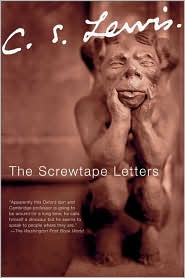
I have been re-reading C.S. Lewis's classic The Screwtape Letters.  It's a series of letters from Screwtape, a senior demon, to his junior nephew demon Wormwood on how best to tempt Wormwood's human "patient".  Screwtape and Wormwood are basically the opposite of a guardian angels.  They are - quite literally - hell's angels.  And Screwtape is passing on the tricks of the trade.  


Lewis's insight into the spiritual life was absolutely brilliant.  In The Screwtape Letters Lewis has Screwtape reflecting on the ways Wormwood might seduce his subject into perdition through the most ordinary of events.  Sin isn't always what we humans think.  In fact, Screwtape suggests that it is actually beneficial to the forces of darkness that we humans stand guard against mortal temptation in order that our more venal sins can slip through the back door.  "Murder is no better than cards if cards can do the trick," Screwtape writes.  "Indeed the safest road to Hell is the gradual one - the gentle slope, soft underfoot, without sudden turnings, without milestones, without signposts. . ."

In one particularly vivid seen Screwtape tells of having once had as a patient an atheist, who while studying a book suddenly began to ponder spiritual questions.  Fearing that he might be in danger of losing the patient to heaven, Screwtape acted fast through a gentle pang of hunger.  Having been diverted away from the consideration of deeper, more eternal matters, the patient never turned back again.

Falling out of relationship with God is so seldom the result of one singularly grave or heinous sin.  Really, its generally a lot more dull than that.  It's one step at a time, one glance at a time, one simple diversion from which we never come back.  

Counteract this: stop right now and center on God for a couple of minutes.  Sing an old hymn.  Pray for somebody you love.  Pray for somebody you don't.  Do this again for two minutes before the day is out.  Repeat tomorrow.  

Screwtape hates that!

Wednesday, September 26, 2012

What Difference Does Baptism Make?

   Sunday I taught the first of a two-part series for children who have either recently been baptized or are considering it.
 
   We began by talking about decisions. Each of the kids talked about a decision they had made that morning - the decision to get up and come to Sunday School, the decision to wear the clothes they were wearing, etc. We then turned in our Bibles to the third chapter of the book of Luke where we read about all the people of Judea and Jerusalem who came down to be baptized by John the Baptist in the Jordan River. We read how John was "preaching a baptism of repentance for the forgiveness of sins," and I told them how I believe repentance means turning away from selfish ways and deciding to go where God wants us to go and become who God created us to be. We talked about what that would look like in our lives. There was lots of talk about being nice to siblings and obeying parents. An especially precocious boy talked about being productive and "contributing to the economy". His dad has an MBA. Then there was the funny moment when the three boys in class who have been baptized were asked if they still sin. They're gaping eyes and mouths gave them away.
 
    Then yesterday at our Tuesday morning men's breakfast the lesson was again on baptism. This time Penny Vann was leading and he was using theologian Jim McClendon's idea of baptism as a "performative sign". By that McClendon meant that like a stop sign tells us to stop, the sign of baptism tells the world that we intend for our lives to belong to God. At baptism we declare ourselves - in the words of the Apostle Paul - "dead to sin and alive in Christ."
 
    Well, the two conversations - one by 10-year-olds and another by 50, 60, 70 and 80-year-olds - were certainly on different levels. But the questions were substantively the same. What is baptism? What does it mean to repent of our sins? Can we be so alive in Christ that the sin in us truly dies?
 
    These questions make me think of a scene in one of the great Texas films of all-time Tender Mercies. Robert Duvall plays a broken down, honky tonk cowboy named Max Sledge (can you think of a better name for a broken down, honky tonk cowboy?). Duvall meets a woman whose love and gentle spirit set him in the right direction. Soon we see him in church being baptized along with his new stepson. On the way back the two ride side by side in Max's pickup. Max looks over and asks his stepson, "Do you feel any different?" "Nope," the boy says. "Do you?" "Not yet," Max answers back.
 
    The key word I think is "yet". Max and his stepson and the boys in my class have all just recently declared who they are going to be. They've just decided. Now all the decisions that follow are to be based upon that first, big decision. They don't feel any different yet - but they have made it known that their intention is to be different.
 
    As I looked around at those men on Tuesday morning, I know they still sin. But I also know they are indeed "different" from what they once were. They're gentler now. They're more loving now. They're sober now. They're no longer consumed with success now. In other words, they've been baptized - dead to sin and alive in Christ.
 
    I remember what some saint somewhere once said, "I ain't what I ought to be. I ain't what I'm gonna be. But thank God I ain't what I was." It's true for the men on Tuesday morning. May it be true for the kids on Sunday also.

Wednesday, September 19, 2012

A Sprig of Life for Muslim/Christian Relations

On Monday I was a guest alongside Imam Samer Altaaba on Fox Talk 950, a local morning radio talk show. We were invited on to discuss the need for increased Muslim-Christian relations in the wake of the violent Middle East uprisings which ended in the murders of Ambassador J. Christopher Stevens and three other Americans in Libya.  (A link to an audio recording of the interview is available at http://www.centralmediaserver.com/kjtv/radio/monftim2.mp3 until next Monday.)

 
The imam has condemned the embassy attacks and similar acts of violence. Like most Muslims, he is a person of peace and goodwill.  Unfortunately, religious extremists and political opportunists overshadow the vast majority of Muslims. I hoped the interview would help Lubbock hear another voice.

 
In our conversation I spoke about a man named Krister Stendahl, a Lutheran priest who served as Dean of Harvard Divinity School and did much to promote inter-religious dialogue last century. Stendahl said that when we enter into conversations with people of other faiths we should follow three principles.

 
1.  We should listen to them directly — not to their enemies.

 
2.  We should not compare our own religion's best to the others' worst. This would help us come to terms with the fact that all religions have their good and their bad, their exemplars and their extremists.

 
3.  We should seek what Stendahl called "Holy Envy."  By this he meant we should look to others' religious devotion and practices and seek to find in them what might inspire our own.

 
The conversation with the imam went well.  We told stories of our own friendship and spoke of ways our two communities have remained open to each other in these turbulent times.  At the conclusion of the interview I talked about losing Ambassador Stevens and our need to honor his sacrifice by seeking to be ambassadors of goodwill ourselves. For with half of humanity being either Christian or Muslim, the fate of the world depends upon it.

 
But perhaps most gratifying about the experience was the Facebook message I received afterward. It was from Justin Gornto, one of the kids in the youth group I once pastored in North Carolina. Justin grew up and joined the Army. He served a tour in Afghanistan, where he was wounded and almost lost his life in an IED attack. Justin learned about the interview on Facebook and streamed it from North Carolina. He wrote me to tell me he appreciated the conversation and hopes for more like it.

 
As I read that note from Justin a wave of hope washed over me. Justin knows first hand how dangerous these days are; yet he remains open to the possibility — indeed necessity — of peacemaking.
 
In the midst of so much violence, terror, and death, it was a real sprig of life.

-Ryon Price

Thursday, September 13, 2012

Turning South


   Yesterday was bookended by two events that have me thinking of making the most of our time together.


First, during staff meeting I opened our website (www.secondb.org)to see Amy and son Landon Gantt right there on our homepage.  Knowing that the Gantt family moved to Portland, OR, two months ago, I asked the rest of the staff how long we could leave former members' pictures on our homepage? The consensus was not long.
 
Then, last night I read in Texas Monthly online that famed Texas novelist Larry McMurtry is closing down his iconic bookstores in his hometown Archer City. I thought again of the Gantts and a road trip Amy's husband Joe and I took to visit McMurtry's bookstore.

 
Last June, Joe and I hopped into my Subaru wagon and headed east to the campus of Austin College in Sherman to join our youth at camp. Joe was serving as a youth sponsor and agreed to keep me company as I couldn't leave until after church on Sunday. We drove down Hwy 82 towards Wichita Falls and our talk turned to McMurtry's store and how it was the perfect store for both booklovers and Texans. We didn't see how we could profess to be either one if we didn't stop by in Archer City on the way back.

 
Five days later, with a map of Texas in one hand and the steering wheel in the other, I turned off at Wichita Falls and headed south for 25 miles past the burned grass and frozen pumpjacks that constitute what is left of Archer County, the one exception being the town square of Archer City itself, which still has some life because of McMurtry's bookstore and lore. We pulled in and looked off to the left of us where we saw the burned out hull of the Royal Theatre, which was made famous by McMurtry's book The Last Picture Show and the movie it inspired.  We parked across from McMurtry's Bookstore Number One and went in.
 

What we found when we stepped inside was part bookstore, part museum with enough Texana history and movie memorabilia to make us both salivate. We knew our wives would not appreciate our lollygagging, so we limited ourselves to thirty minutes in the bookstore. I perused the miles of racks and found an Oxford sociology of American religion and an old Barclay's New Testament commentary. I can't remember what Joe bought, but I bet it had something to do with his favorite subject — politics — preferably of the leftward-leaning variety. When our thirty minutes were up, we met back at the register, and there behind the counter was McMurtry himself.  He was stacking books and never turned to look at us — a perfect statue of himself, just the way we wanted to remember him. We walked back out into the hot sun, crossed the street to a local cafe, sat down and ate potato salad, then loaded up for the trip home. We talked all the way home about camp and the church and where we had been and where we might be going.
 
What we didn't know at the time was that Joe and his family would definitely be moving to Portland. We knew about the offer there, and he had accepted it. But we were still holding out hope he might get a counter-offer here in Lubbock. We didn't know for sure. And we certainly didn't know that McMurtry would soon be closing down the bookstores. We didn't know that a road trip like the one we were on just wasn't going to be possible for much longer. Today I'm really grateful we shared that experience together.
 
I guess the point of all this to say turn south — take the long way, the road less traveled. Go ahead and hop in the car and make the memory. And talk and get to know each other along the way. You'll be glad you did, and our church will be stronger for it.


For as McMurtry once said, "If you wait, all that happens is that you get older."


Wednesday, August 29, 2012

Public Schools and Christian Ed

               Monday saw Lubbock Independent School District start back to school and our daughter Gabby begin her first day of Kindergarten. There were pictures in the home before we left. Pictures at the car when we pulled up. And wailing and gnashing of teeth when we left. O.K., there wasn't really any wailing and gnashing, but if there had been it would have come from her mother and me. Gabby was just fine with the idea of beginning a new adventure away from her parents.
                Part of this new adventure means a new wardrobe. Gabby’s school has instituted a uniform policy for the first time this year. Her school is a public charter school. That means kids come from vastly divergent families, neighborhoods, and socio-economic classes. The common uniforms bring a level of unity to the students and school spirit within the halls. The idea is that kids sacrifice a degree of individual self-expression for the sake of the community as a whole. (Though in the first week I have seen plenty self-expression in places where uniformity is not required — topping off Gabby's Plain Jane khaki pants and blue polo t-shirts has been lots of hot pink, polka dot, and rainbow ribbons, and spearmint belts. Come winter I'm sure she will exercise creativity in coat color and patterns as well.)  
                Setting aside whether or not school uniforms are a good idea, they are for me a sign of our society's willingness to compromise certain individual prerogatives for the sake of the well being of the community at-large. This is especially true when it comes to religion in our public schools. 
                On Monday as I was walking Gabby into the school I was met at the door by another dad who was escorting his son and daughter into the building. The three of them appeared to be of perhaps Thai or Indonesian descent and the daughter, who appeared to be about age 9, was wearing a scarf to cover her hair. "Muslims," I thought. "Isn't it great that we live in a country where a Baptist preacher and a Muslim man can meet and walk their children through the same school doors."
                It is great; but it necessitates some real give on both our parts. Because we live in a country where no religious sect or faith can be established, our kids are not being taught much — If anything — about the Bible, the Koran, the Muslim and Christian faiths, or any other religious traditions or history for that matter. That Muslim father and I know that when the kids come home and we ask them what they learned in school they will not be telling us about Isaac and Ishmael.  
                Some think this is the only way to progress in an increasingly pluralistic society. I, however, believe we absolutely need some non-sectarian religious instruction as religion has been and will continue to be such a powerful force in history. In fact, one cannot know very much about history without knowing something about religion. Nevertheless, my real point is not so much about what secular public schools should or should not be teaching our children about religion, but rather what we as Christians ought to be teaching them. 
                As Christians we are at a level of Biblical illiteracy that has not been seen since at least the advent of the printing press in the 16th century, if not the 4th century. Any young person reading this (Does anyone read this?) is likely not to know who the heck I am talking about when I mention Isaac and Ishmael. Imagine what they would think if I had mentioned Balaam's ass! In this brave new world our children live in, we have got to tell the old, old story.
                This semester Second B is working hard to put together more basic Bible study opportunities. Our children's pastor Judy Bryant continues to provide basic Bible story instruction throughout the course of our Sunday and Wednesday night children's programming. Our youth pastor Ben Ondrak is including more Bible study on Sunday nights for youth, with a recognition that we have to make the most of every opportunity to expose them to Scripture. On the adult side, my wife Irie and some others are beginning a women's Bible study on Thursday nights. On Wednesday nights Steve Rogers will be teaching a series on Science and Faith and will be letting modern topics such as bioethics, astronomy, and evolution be in conversation with Scriptures. I will follow up later in the semester with an introductory study of the first few and very profound chapters of the book of Genesis. If you are interested in learning more about or getting involved in any of these opportunities, please contact us. We need more teachers for our children and welcome more participation from our adults.
                This summer I marked 19 years since I first gave my life to Christ. I did so after someone told me about a conversation Jesus had with someone in the Bible. That story changed my life. And I still believe that old, old story has the power to change lives.
                I was happy to meet that Muslim father at the door Monday morning. And I can live with the fact that neither of our kids will get the kind of religious instruction we might wish they had in school. It's what we as individual families sacrifice for the sake of unity. But the uniforms come off at home. And I would be remiss — way remiss — if I didn't tell Gabby about Isaac and Ishmael and Isaac's grandson Joseph who also had a flair for accessorizing with a coat of many colors.

Tuesday, August 14, 2012

Charlie Johnson On Gender Equality in the Bible


   A Biblical case for Gender Equality?  That's the case my friend and former Second B senior pastor Charlie Johnson makes in this latest podcast conversation.  

   Listen to the conversation with Charlie Johnson and be transformed by the renewing of your male or female mind.